Heywood
Every pension scheme sends annual benefit statements, but not every member understands them.
Pension schemes know this from experience: after each annual statement cycle comes the spike in confused member calls. Communications that comply with regulatory requirements but don't achieve their fundamental purpose: helping members understand where they stand.
This leads to predictable results. Confusion, inaction and avoidable pressure on administrator helplines, whether that be email, phone or even post.
What most pension communications could do better
Traditional pension communications are built around compliance and efficiency. They prioritise completeness over comprehension, often leaving members to interpret information that is jargon-heavy and difficult to decipher.
This challenge is well understood and places the burden of interpretation on the reader, which often leads to inaction or unnecessary follow-up. But what was once an acknowledged problem is now a regulatory expectation.
The FCA's Consumer Duty and TPR's focus on member outcomes have shifted the standard from 'information provided' to 'information understood'.
Schemes are increasingly expected to demonstrate that communications support good member decisions. This changes the question from 'did we disclose?' to 'did they understand?'
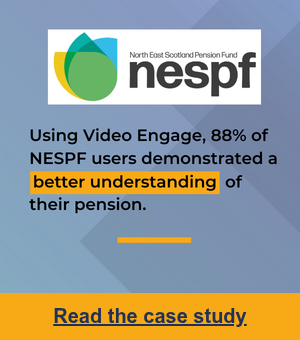
Data from schemes using personalised video shows measurable shifts in member understanding. The North East Scotland Pension Fund for example found that 88% of members who accessed their personalised video statement reported a better understanding of their pension.
That improvement matters because understanding precedes action. When members grasp what their figures mean, they're more likely to engage with decisions around contributions, investment choices or retirement planning.
Personalisation at the surface level does little to solve this. Adding a name or individual figures does not help if the member still cannot see what those figures mean for them.
Why context matters more than surface-level personalisation
Meaningful personalisation explains context. It answers simple but critical questions. Where am I now? What does this mean? What happens next if I do nothing?
This is where pension communication starts to feel relevant. Information becomes a narrative rather than a notification. Members aren't just shown numbers, but how those numbers relate to their own circumstances.
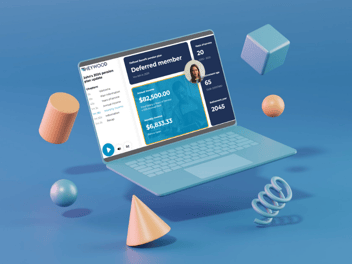
Members consistently say they prefer straightforward presentations that focus on their information, rather than heavily animated or generic content.
Getting the language right matters too. Plain language that respects members' intelligence while explaining complexity clearly is fundamental to effective pension communication.
How clearer communication leads to better member outcomes
When pension communication is personalised properly, behaviour changes.
Data from personalised video benefit statements supports this. Among members who visited annual benefit statement webpages, 56% chose to play the video. When presented with both options, members consistently favoured video over downloading a PDF.
This matters because engagement alone is not the goal. Understanding is. Nearly three-quarters of members who accessed a personalised video said they would review their pension options after seeing how additional contributions could affect their outcome.
This is the outcome chain in action. Clear explanation builds understanding, understanding builds confidence and confidence leads to action.
Why format plays a role in pension communication
Video allows complex pension information to be paced, explained visually and reinforced through interactive recaps. Members can pause, revisit sections and absorb information at their own speed. Interactivity allows individuals to engage more deeply where it matters to them, without overwhelming those who want a simpler overview.
Digital delivery also addresses practical challenges around security, cost and member accessibility. Read more about the case for secure digital pension communication.
Measuring success properly
The success of pension communication should not be judged by delivery alone. Open rates and downloads only show that the information was received.
Better measures sit further downstream. Fewer confused calls. More informed decisions. Higher confidence in member choices. Reduced servicing demand.
Personalisation earns its value when it improves understanding and supports better decisions, not when it simply changes the look or format of communications.
It's worth pausing to consider if your communication strategy improves outcomes for 90% of members but creates new barriers for the remaining 10%, it has not met the standard that regulators are setting. To be a true success, pension communication must work for every member.
Where this leaves schemes
When communication is clear, relevant and grounded in individual circumstances, outcomes improve. Members engage with confidence. Decisions are better informed. Pressure on support teams reduces.
The question for schemes isn't whether better communication matters, it's how to deliver it at scale without rebuilding your entire engagement strategy. Personalised video sits naturally within existing communications workflows, supporting annual statements, scheme changes, and key decision points where clarity matters most.
If your scheme is looking at how to improve member understanding while meeting rising regulatory expectations, it's worth exploring what works elsewhere. The evidence is already there.